
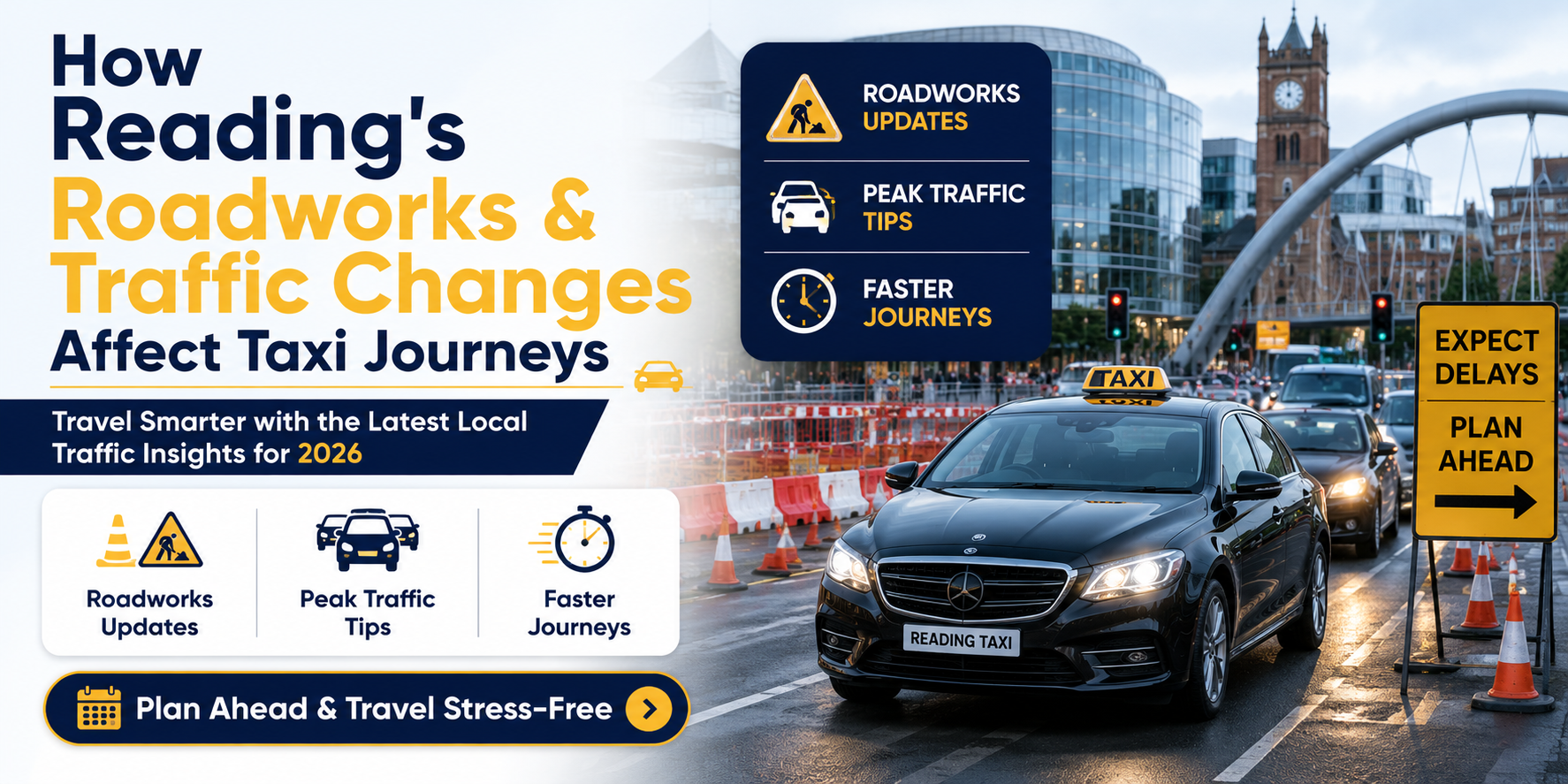
Reading continues to grow as one of Berkshire’s busiest business and transport hubs, welcoming thousands of commuters, students and visitors every day. With ongoing infrastructure improvements, road maintenance and new developments across the town, travelling has become more dynamic than ever. Whether you’re commuting to work, heading to Reading Station or catching a flight, understanding how local roadworks influence your Reading Taxi journey can help you save valuable time and avoid unnecessary stress.
While road improvements are essential for the town’s long-term development, they can temporarily affect journey times, traffic flow and travel planning. Knowing what to expect allows travellers to make better decisions before leaving home.
Why Is Reading Experiencing More Roadworks?
Like many growing towns across the UK, Reading continues to invest in its transport infrastructure.
Road improvements help:
- Reduce future congestion
- Improve road safety
- Upgrade public transport routes
- Support new housing developments
- Improve cycling and pedestrian access
- Maintain ageing road infrastructure
Although these projects benefit the community in the long run, temporary traffic disruption is often unavoidable.
How Do Roadworks Affect Daily Taxi Journeys?
Roadworks rarely close an entire town, but they often change how vehicles move through busy areas.
Taxi journeys may be affected by:
- Temporary lane closures
- Diversion routes
- Reduced speed limits
- Traffic signal changes
- Temporary one-way systems
- Increased congestion during peak hours
Even relatively small roadworks can influence journey times, particularly during weekday mornings and evenings.
Which Areas Around Reading Are Most Likely to Experience Traffic?
Traffic conditions can change throughout the year depending on construction projects, events and commuter demand.
Busy areas often include:
- Reading town centre
- Reading Station
- A33 corridor
- M4 junctions
- Oxford Road
- London Road
- Caversham Bridge
- Shinfield Road
- Green Park business district
These routes are frequently used by commuters, buses and delivery vehicles, making traffic conditions more variable.
Why Does Timing Matter?
The same journey can take very different amounts of time depending on when you travel.
Typical busy periods include:
Morning Rush Hour
Commuters travelling to offices, schools and Reading Station create heavier traffic between early morning and mid-morning.
Afternoon School Traffic
School collections increase congestion on residential roads and nearby junctions.
Evening Peak
Many workers leave offices at similar times, resulting in slower traffic across major roads.
Planning around these periods often leads to smoother journeys.
How Can Roadworks Affect Airport Transfers?
Many travellers leave Reading for:
- Heathrow Airport
- Gatwick Airport
- Luton Airport
- Stansted Airport
Unexpected traffic caused by roadworks can influence overall journey times, particularly when connecting with the M4 motorway.
Allowing additional travel time helps reduce the risk of unnecessary stress before a flight.
What About Reading Station?
Reading Station remains one of the busiest railway stations outside London.
Roadworks nearby can affect:
- Taxi pickup points
- Drop-off access
- Station approach roads
- Local traffic flow
Travellers with train reservations should always allow extra time, particularly during engineering works or major events.
How Do Taxi Drivers Adapt to Changing Traffic?
Professional taxi drivers use local knowledge alongside navigation technology to identify the most practical routes.
Factors they often consider include:
- Live traffic conditions
- Road closures
- Diversions
- Peak travel times
- Local events
- Weather conditions
Experience plays an important role, especially when unexpected congestion develops.
What Role Does Technology Play?
Modern navigation systems help monitor traffic in real time.
Drivers can often identify:
- Delays ahead
- Alternative routes
- Estimated arrival times
- Temporary road closures
Technology allows journeys to adapt as conditions change throughout the day.
Why Should You Leave Earlier During Roadworks?
One of the simplest travel tips is to allow additional time.
This is especially useful when travelling for:
- Airport departures
- Business meetings
- Hospital appointments
- University exams
- Weddings
- Sporting events
Leaving 15–30 minutes earlier can significantly reduce travel pressure.
How Do Local Events Add to Traffic?
Reading hosts numerous events throughout the year that increase traffic alongside planned roadworks.
Examples include:
- Reading Festival
- Reading Half Marathon
- Christmas markets
- University graduation ceremonies
- Community celebrations
- Sporting events
Visitors unfamiliar with local roads may experience additional delays during these periods.
A Story That Many Reading Residents Recognise
Imagine a commuter travelling from Caversham to Reading Station on a weekday morning. The route is familiar and usually takes around 15 minutes. However, temporary roadworks introduce a diversion, while increased traffic near the station slows vehicles further.
Because the traveller allowed extra time, they still catch their train without rushing. Another commuter who left at the usual time arrives only minutes after departure and misses their service.
The difference wasn’t the distance—it was understanding how temporary roadworks can influence daily travel.
What Can Travellers Do to Reduce Delays?
Simple planning makes a noticeable difference.
Helpful tips include:
- Check traffic updates before leaving.
- Allow additional journey time.
- Confirm station or airport arrival times.
- Avoid peak travel periods where possible.
- Stay informed about local roadworks.
- Book transport in advance for important journeys.
Being prepared is often the easiest way to avoid unnecessary stress.
Looking Ahead to Reading’s Future
As Reading continues to expand, infrastructure improvements will help create a more efficient transport network for residents, businesses and visitors.
While temporary roadworks may occasionally slow journeys, these projects are designed to improve traffic flow, road safety and connectivity over the coming years.
Travellers who understand local conditions can continue to enjoy reliable journeys by planning ahead and allowing for changing traffic patterns.
Final Thoughts
Roadworks are a normal part of maintaining and improving a growing town, but they don’t have to disrupt your plans. Whether you’re travelling to Reading Station, commuting across town or heading to the airport, understanding local traffic conditions can make every Reading Taxi journey more predictable. With a little preparation and awareness of changing road conditions, travellers can reduce delays and enjoy smoother journeys throughout Reading in 2026.
Frequently Asked Questions
Why are there so many roadworks in Reading?
Reading continues to invest in transport infrastructure, road maintenance and new developments to improve traffic flow, road safety and support future growth.
Do roadworks affect taxi journey times in Reading?
Yes. Temporary lane closures, diversions and increased congestion can sometimes extend journey times, particularly during peak hours.
When is Reading traffic busiest?
Traffic is generally busiest during weekday morning and evening commuter periods, school collection times and major local events.
Should I allow extra time for airport transfers?
Yes. Allowing additional travel time helps account for unexpected congestion, especially when travelling via the M4 or during planned roadworks.
How can I check Reading traffic before travelling?
You can use live traffic apps, satellite navigation systems or local traffic updates before leaving home.
Which areas experience the most congestion in Reading?
Busy locations often include Reading Station, the town centre, the A33, Oxford Road, London Road, Caversham Bridge and routes connecting to the M4.
Can taxi drivers avoid roadworks?
Professional drivers often use live traffic information and local knowledge to identify practical alternative routes whenever possible.
How can I reduce delays when travelling in Reading?
Plan your journey in advance, check traffic conditions, allow extra travel time and avoid peak hours where possible. This approach helps create a smoother and less stressful journey.